

























Great white sharks could soon roam Britain's seas warn scientists after bone-chilling new study
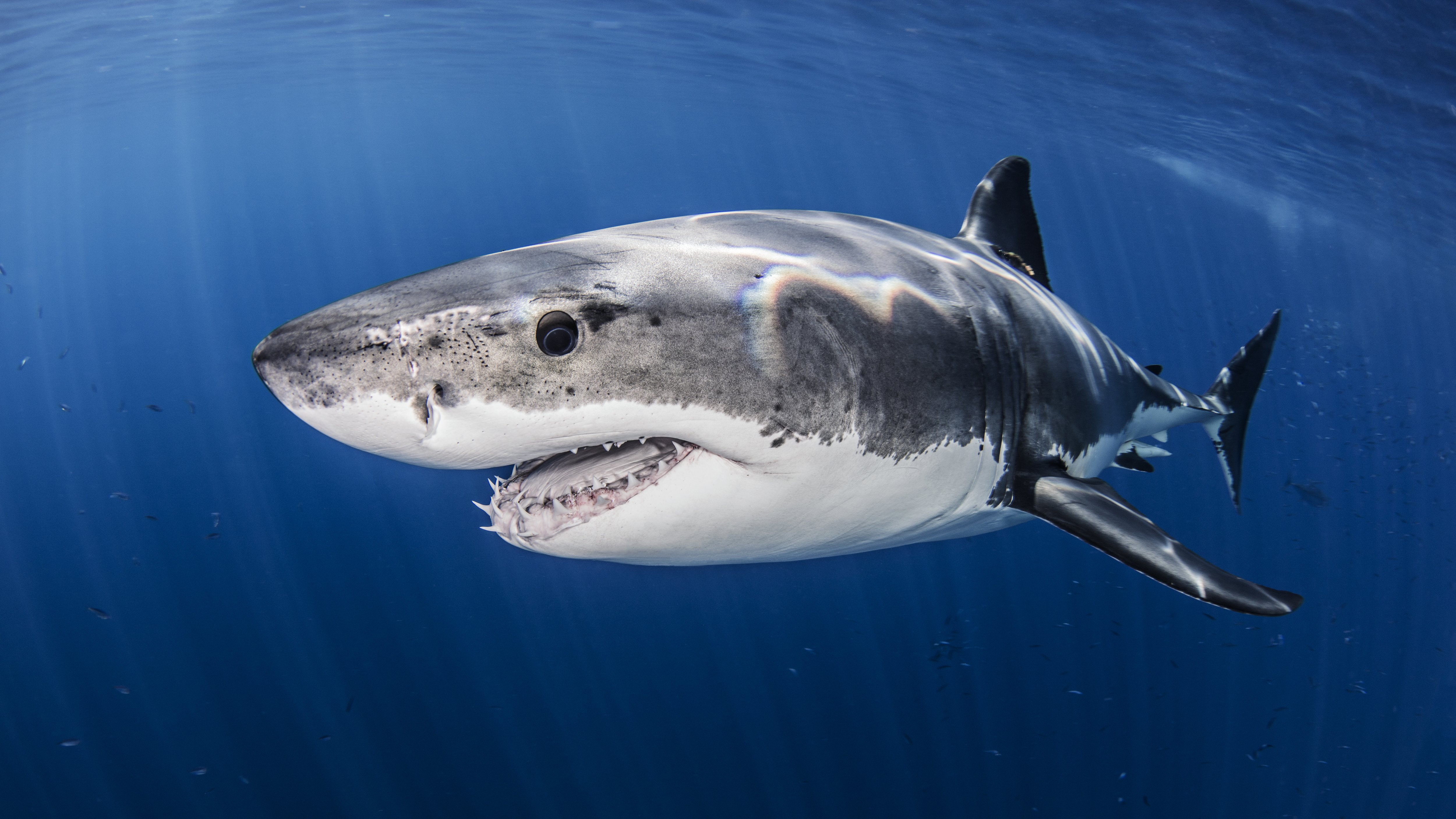
Great white sharks could soon roam the seas around Britain, scientists have warned after the release of a chilling new study.
According to researchers, rising global ocean temperatures could make our seas an optimal habitat for these apex predators to thrive in.
Although there have long been rumours and sightings of great white sharks in British waters - particularly off the Cornish coat - no concrete proof has ever confirmed their presence.
The closest confirmed specimen to Britain came in 1977, when a female shark was caught off La Rochelle in the Bay of Biscay - 193 miles away from Land's End.
But a new study has revealed an extinct relative of the beast once thrived off Britain's coast, gorging on large whales.
In The Conversation blog, scientists wrote: "Our new study of two whale fossils, with preserved fragments of shark teeth, suggests the modern descendants of these animals could once again roam the southern region of the North Sea, between the UK, Belgium and Denmark.
"Climate change may recreate the conditions that allowed the ancestors of great white sharks to hunt in these waters."
A team of scientists - including the Royal Belgian Institute of Natural Sciences' Oliver Lambert and Professor John Stewart from Bournemouth University - have analysed five-million-year-old whale fossils discovered in the North Sea.
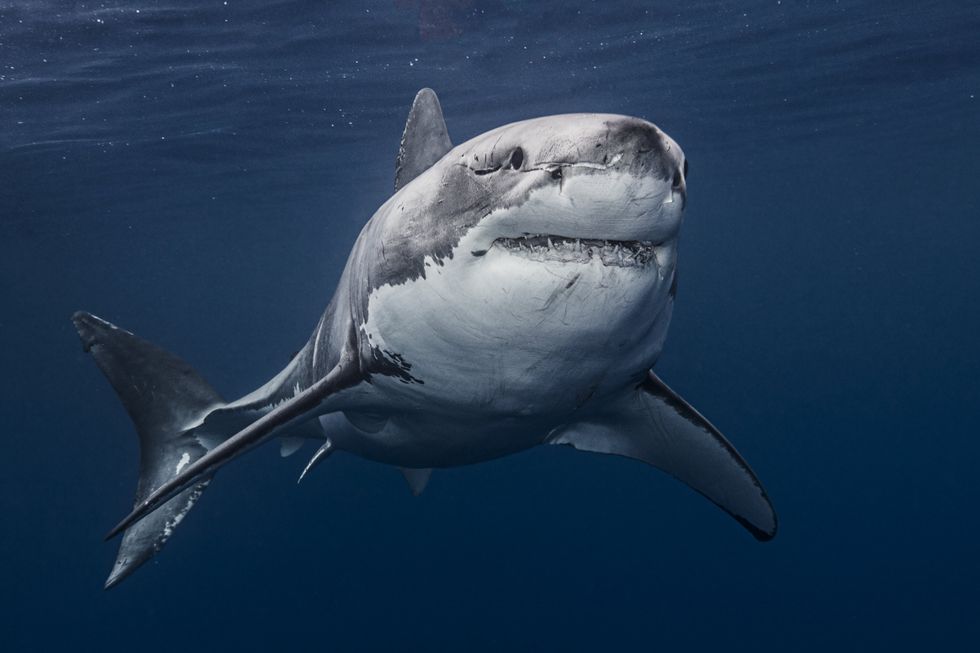
They uncovered the presence of bite marks on the large specimens - with fragments of fossilised teeth from the sharks that had eaten them.
Researchers believe the teeth belonged to an extinct species of mako shark, a close relative of the great white.
They wrote: "It appears that the shark was attempting to separate the whale's head from the rest of the body."
The scientists added that warming seas around Britain "could attract dolphins and seals, and in turn great white sharks or other large marine predators".
SHARKS - READ THE LATEST:
- Tourist fighting for life after losing leg in horror shark attack at popular holiday hotspot
- Sharks 'drugged with cocaine and painkillers' found near Caribbean hotspot
- Boy, 12, dies after shark attack in Sydney Harbour
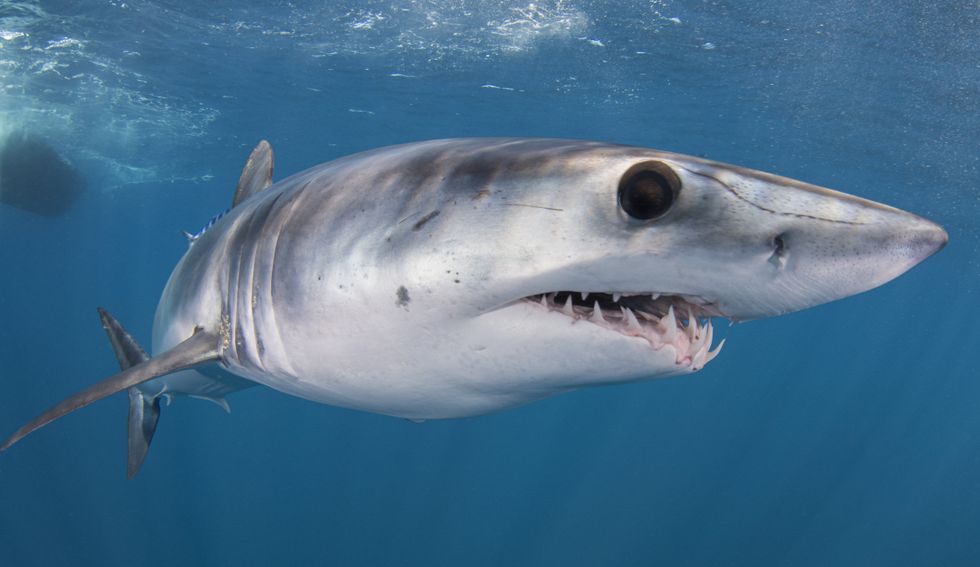
However, three years ago, a study noted that Britain currently shows "near-perfect habitat suitability" for great white sharks.
Lead author Max Kimble noted that "over 100 reports" were made of sightings of the apex predator in British waters, mainly from Cornwall and Scotland.
He wrote: "British waters are home to the largest grey seal population in Europe and are less than 200 miles away from a known great white population.
"This coupled with the shark's global distribution and preference for more temperate waters has left many wondering why there has not been a confirmed sighting of this species.
"To examine the suitability of British waters, four white shark's migrations were mapped spanning nine years.
"The results of this report showed that British waters display near-perfect habitat suitability for both sexes year-round, thus indicating that there is no environmental reasoning for their apparent absence."
Mr Kimble theorised that if a great white shark were to venture into British waters, it is likely to be one from the current Mediterranean population swimming in deep water.
He concluded: "This species is currently experiencing a latitudinal shift north in habitat suitability due to climate change, indicating that if the great white is not in British waters yet it may soon be."
Currently, there are 29 species of shark that call the waters around Britain home.
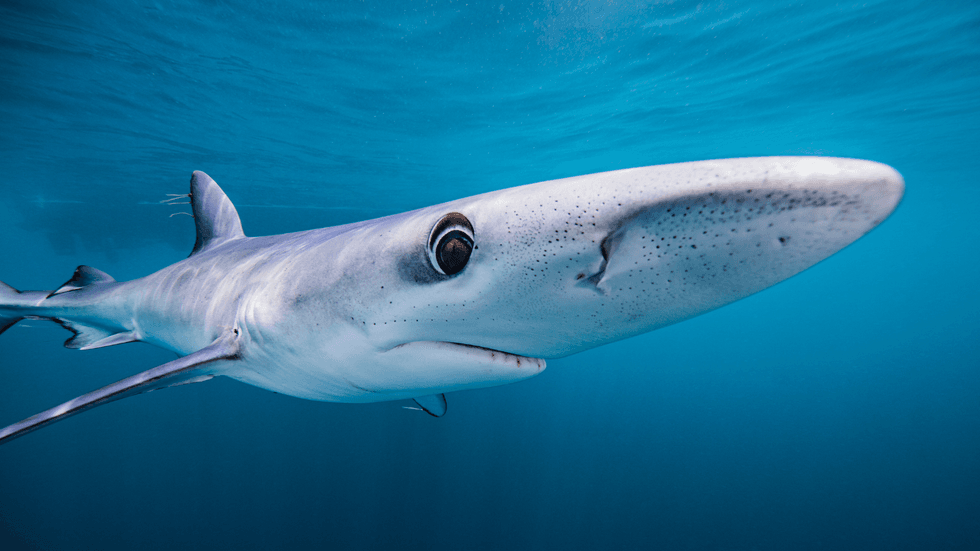
Although the majority pose no danger to humans, there are a handful of species capable of causing injury - including the shortfin mako, blue shark and porbeagle.
Our Standards: The GB News Editorial Charter
What's Your Reaction?
 Like
0
Like
0
 Dislike
0
Dislike
0
 Love
0
Love
0
 Funny
0
Funny
0
 Angry
0
Angry
0
 Sad
0
Sad
0
 Wow
0
Wow
0