
























Noah's Ark archaeologists discover 'manmade Turkish mound' dating to time of Biblical flood
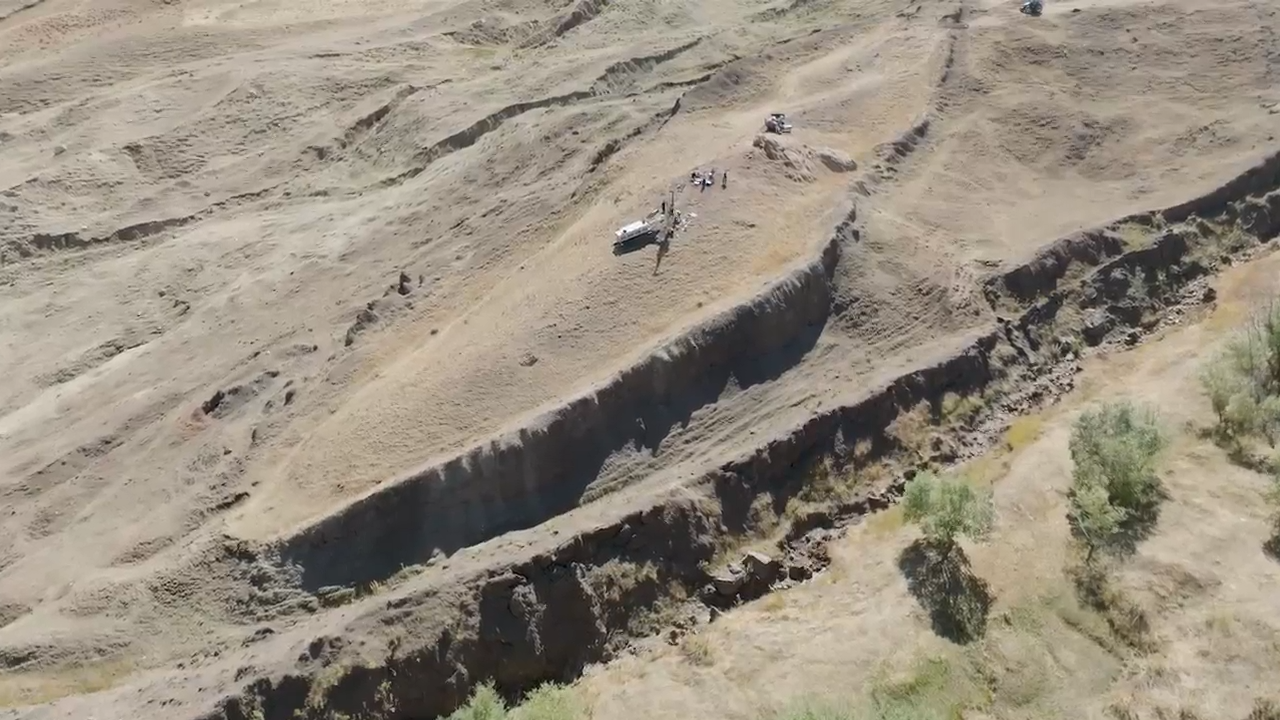
A group of researchers working in the Turkish mountains searching for Noah's Ark have found a "manmade mound" dating to the time of the Biblical flood.
Charred wood fragments extracted from a boat-shaped geological formation in the Turkish mountains have been dated to approximately 4,300 years ago, placing them squarely within the period traditionally linked to the biblical Flood.
Two pieces of wood, recovered from depths exceeding 30 feet, returned radiocarbon dates that overlap with timelines proposed for the Flood in traditional biblical chronologies.
The research team announced the laboratory results on Monday, with Professor Cenker Atila, who unearthed the fragments, calling them "an extraordinary and deeply exciting development for our research team."
No scientific consensus holds that a worldwide deluge occurred 4,300 years ago, though certain biblical genealogies from Genesis point to that era.
Biblical scholars have calculated that the Flood occurred roughly 1,656 years after creation, dating it to approximately 4,370 years ago.
The first sample yielded a most probable date range of 2410 to 2269 BC, with a 60.6 per cent probability assigned to that window.
The second fragment produced an even more concentrated result, returning an 82 per cent likelihood of dating to between 2349 and 2193 BC.

Crucially, both intervals encompass 2348 BC and 2304 BC, two dates commonly proposed for Noah's Flood in traditional scriptural timelines.
Radiocarbon measurements establish when the wood grew, not when it was charred, buried or put to use, meaning they cannot, on their own, confirm the fragments belong to the Ark.
Nevertheless, the team noted signs of deliberate craftsmanship.
Professor Atila said: "I believe this piece of wood was worked by human hands. The shaping marks, surface details, and certain unnatural features suggest that it may have been deliberately shaped by someone for a specific purpose."
LATEST DEVELOPMENTS
- Archaeology breakthrough as mysterious 'sand body' unearthed at Anglo-Saxon burial site
- Some Britons have smaller brains after inheriting special Neanderthal gene, new study finds
- Archaeology breakthrough reveals Britain's first Roman capital was cosmopolitan hotspot
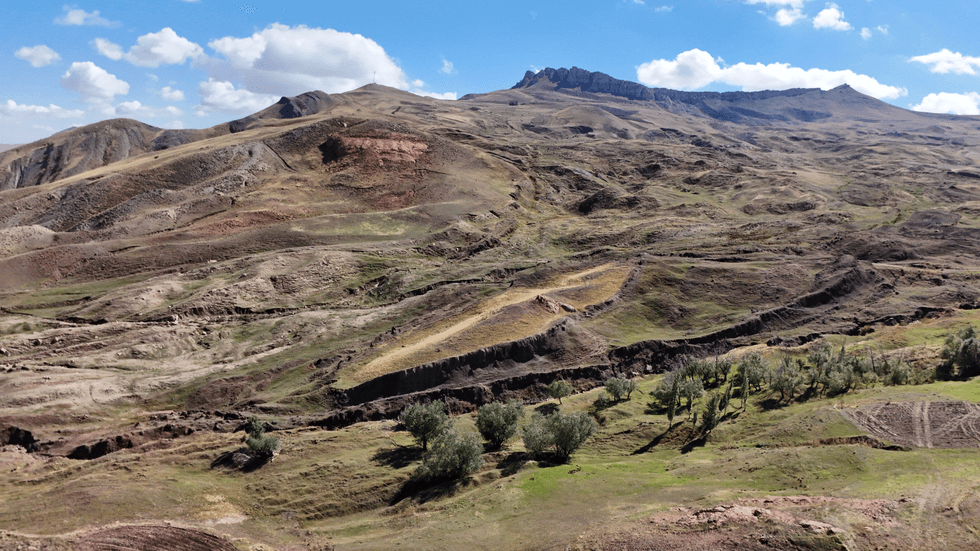
Prior to the wood's discovery, radar surveys had already identified striking patterns within the roughly 515-foot-long formation.
Veteran US defence scientist Dr Khosrow Bakhtar, who conducted the scans using an advanced system developed through US Air Force research, described the results as the most significant of his 45-year career.
Dr Bakhtar said in a late October press release: "It's not geologic-related, because we masked all the geologic features."
The radar detected what the team interpreted as sediment-filled chambers, corridors and tunnels beneath the surface.
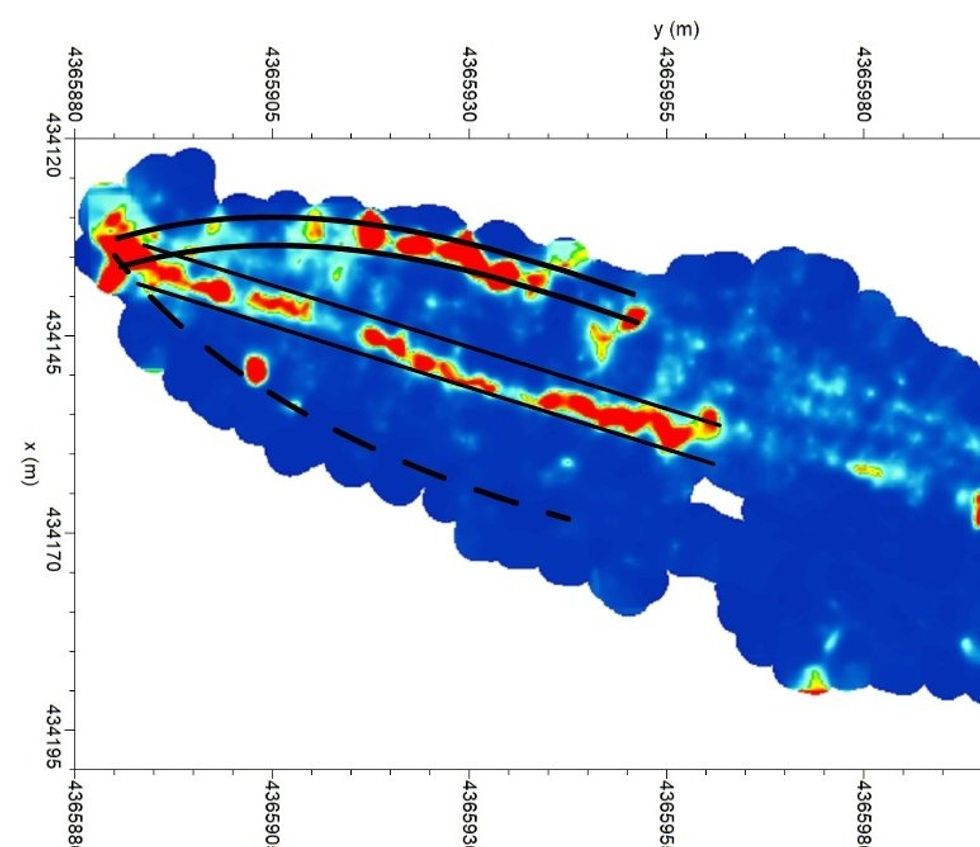
Five notable features appeared to constitute a tunnel system spanning approximately 151 feet, with an average height exceeding 14 feet.
Particularly intriguing was a thick underground layer that seemed to contain three distinct sublayers, echoing the Bible's account of a three-decked vessel.
"In our holy books, Noah's Ark had three levels; in our radar studies, we also identified a formation with three levels," Professor Atila observed.
The team maintains it has "100 percent confirmed" that the formation is a manmade object rather than a product of natural geology.
Project leader Andrew Jones, who has spent nearly three decades investigating the site, previously noted that neither radar nor drilling had encountered limestone or solid bedrock within the structure.
"This destroys the theory that the site is a solid limestone block shaped into a boat by glaciers and weathering after coming down the mountainside, and it also refutes the theory that this is bedrock around which mud flowed to form the shape," he said.
Eliminating those geological explanations does not, however, automatically prove human construction.
Radar readings show how signals interact with underground materials and boundaries, so physical examination is needed to confirm the cause.
Additional samples are being analysed at laboratories in Turkey and Switzerland, with Turkish results anticipated next month. Jones described the scans as a "compelling new line of evidence" rather than definitive proof.
Our Standards: The GB News Editorial Charter
What's Your Reaction?
 Like
0
 Dislike
0
 Love
0
 Funny
0
 Angry
0
 Sad
0
 Wow
0