
























There is just one special interest group forgotten by the Timms Review: taxpayers
The welfare system is in urgent need of repair.
Spending is spiralling out of control, with little sign of slowing down.
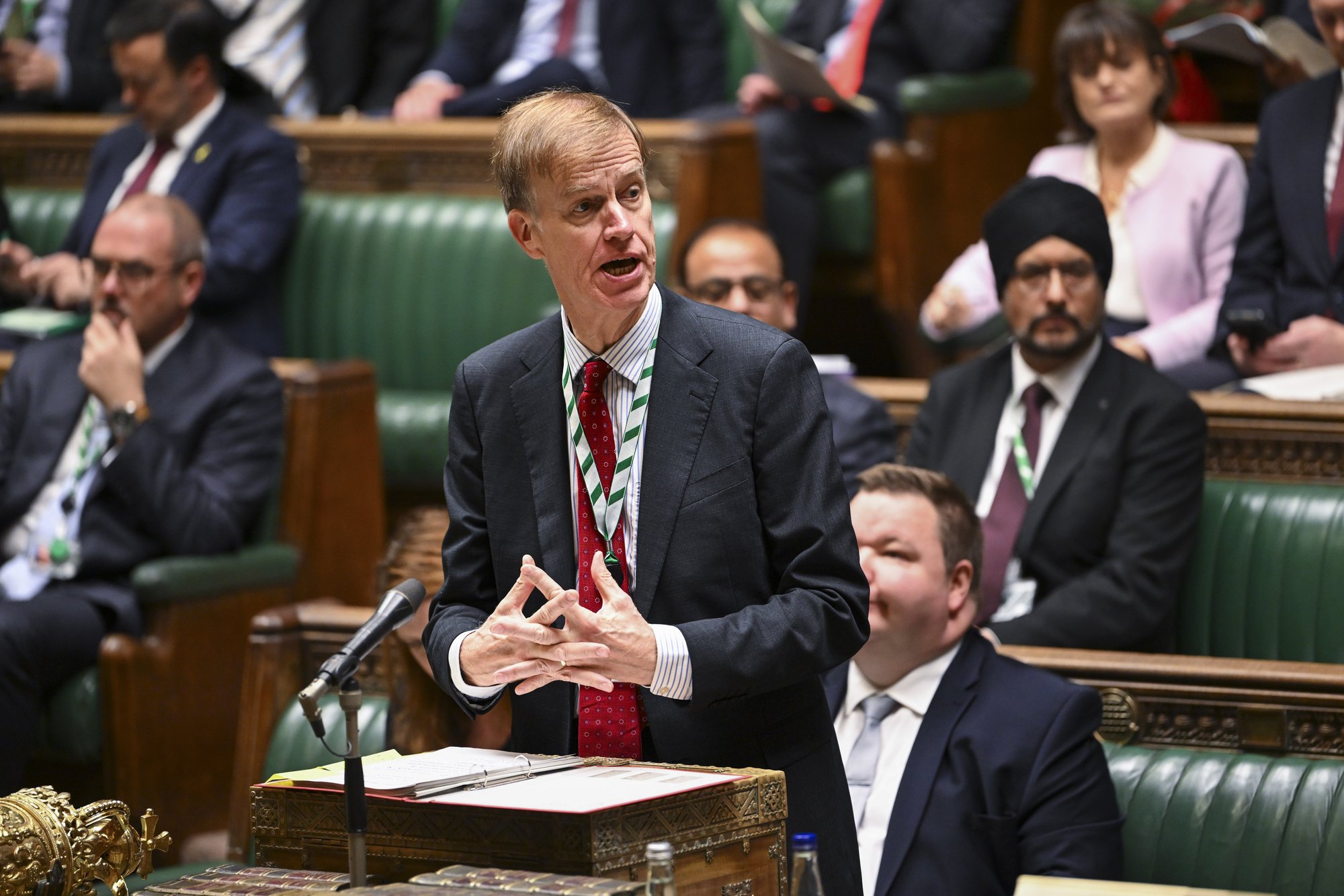
Sir Stephen Timms says in his review Personal Independence Payment (Pip) “is no longer fit for purpose”.
He is right.
But his report misdiagnoses the problems and proposes solutions that risk making an already expensive system even more costly.
Most glaringly, it leaves one crucial group out of the conversation entirely: the taxpayers being asked to bankroll Britain's ballooning disability benefits bill.
The roots of this failure can be traced back to former Prime Minister Keir Starmer and his rebellious backbenchers.
Following the government's botched attempt to reform welfare, which helped sow the seeds of Starmer's downfall, the Timms review became an exercise in placating Labour MPs rather than confronting the crisis.
That political calculation is reflected in recommendations which focus on making the system easier to access while doing little to tackle its soaring costs.
The fundamental concern that will plague taxpayers is simply the amount that we are spending on disability benefits coupled with the surging costs of the system.

For 2020, total Pip expenditure was around £15billion in 2026-27 prices, including £13billion for working-age claimants.
By spring 2026, Department for Work and Pensions forecasts suggested this would rise to more than £41billion by 2031, including £34billion for working-age claimants.
Plainly, these costs are too heavy to bear.
Defenders of the current system will point to Pip being an in-work benefit.
It is there to provide those with a disability a leg up and go about their daily lives.
LATEST DEVELOPMENTS
- Benefits review will not address hike in ADHD claims
- Key disability benefit 'no longer fit for purpose' but review offers ZERO savings as bill nears £34billion
- Disability benefits system 'no longer fit for purpose' as PIP review to be published

Timms goes at length to say many respondents to the consultation felt that without Pip they would struggle to remain in work.
The reality is, however, more than 80 per cent of Pip claimants are not at work.
In these instances, Pip will form part of a benefits soup which disincentivises work and increases reliance on the welfare state.
The way the current system functions allows for this to occur.
At the Taxpayers' Alliance we have called for a disability system which focuses on an individual's need and not on subsidising the costs of the disability.
Data shows one-in-six working-age Pip recipients do not report extra costs linked to their disability.
This raises serious questions about whether unconditional cash payments are always the most appropriate form of support.
Rather than assuming every functional limitation warrants an ongoing payment, the system should establish what assistance an individual requires.
A better system would directly connect individuals’ needs to the support they receive.
Many Pip recipients already have their needs assessed in a more tailored way elsewhere, including in the social care system.
This correlates with another absent note in the Timms review.
Part of the surge in Pip claims is being caused by claims for psychiatric conditions like ADHD and depression.
According to Taxpayers' Alliance data, psychiatric disorders accounted for an average of 39 per cent of Pip claims across parliamentary constituencies in England and Wales in 2026.
ADHD PIP claims have increased by 233.5 per cent over five years.
This surge needs serious scrutiny.

Those who need support should be given the appropriate support and not handed cash, which the current system allows for.
The rise in claims for psychiatric conditions is seemingly being incentivised by the system offering free cheques.
This is another benefit of implementing a system which focuses on support and not subsidising disability.
Nevertheless, the problems do not end with eligibility.
Pip also creates powerful incentives through its interaction with other parts of the welfare system.
A little-known fact is Pip incentivises take-up by offering a ramp to other benefits and past welfare constraints.
The benefits cap is there to ensure households living on benefits should not receive more from taxpayers than a comparable household earns through work.
Essentially, stopping welfare from acting as an incentive.
Yet Pip allows for a claimant to bypass the cap.
Exempting Pip from the benefits cap could be worth as much as £7.5billion per year.
If the Government was serious about bringing down costs, they would close the PIP benefits cap loophole.
Ministers could also have looked at the means of testing Pip.
Pip is not currently means tested, as the state is attempting to subsidise the cost of disabilities regardless of wealth.
A better system would focus on need, which would see payments to those who cannot afford to live without the state rather than wealthier households.
The UK is almost unique in this sense when compared to its international counterparts, the majority of whom have either tested or contributory benefits.
The Taxpayers' Alliance found approximately 200,000 households receiving Pip daily living had a gross weekly income greater than £100,000 a year.
Daily living payments to these households alone could be worth at least £785million per year.
These are not insignificant savings.
However, because the Labour Party is so desperate to hold itself together, they have hidden behind a review which addresses none of the issues that PIP presents.
Ultimately, the Timms review was born out of Labour's desperate attempts to placate its own backbenchers and its conclusions reflect that political calculation.
Claimants and campaigners have been given a prominent voice, while the taxpayers footing the bill have been pushed to the sidelines.
A welfare system that cannot control who qualifies, what they receive or how much it costs cannot be considered fit for purpose.
Timms acknowledges the problem but refuses to confront the financial consequences.
Taxpayers deserve serious reform, not another expensive exercise in political damage limitation.
Our Standards: The GB News Editorial Charter
What's Your Reaction?
 Like
0
 Dislike
0
 Love
0
 Funny
0
 Angry
0
 Sad
0
 Wow
0