



UK workers hit by Rachel Reeves's £210bn tax grab as millions pushed into higher rates
British workers are set to face a £210billion increase in income tax over the coming years as frozen thresholds continue to pull more people into higher bands.
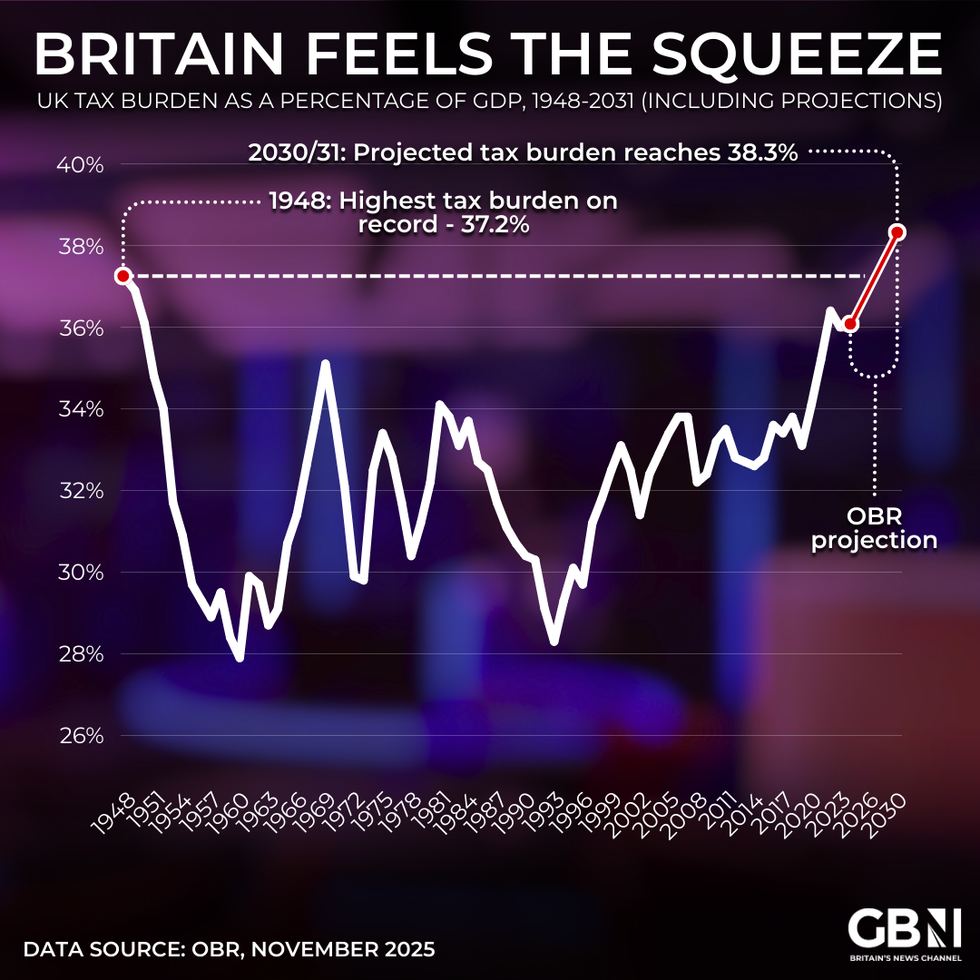
Analysis of official forecasts shows income tax receipts are expected to reach £430billion by 2030‑31, almost double the £220billion collected in 2021‑22.
The rise is driven by fiscal drag, which occurs when thresholds remain fixed while wages increase, pushing earners into higher rates without any formal tax rise.
The policy was introduced by former Chancellor Rishi Sunak and has since been extended by Chancellor Rachel Reeves until 2031.
Tax revenues have already climbed sharply since the freeze began, reaching £330billion last year.
Income tax thresholds have been unchanged since 2021 despite rising wages and inflation.
The personal allowance remains at £12,570, where the 20p basic rate begins, while the higher‑rate threshold is fixed at £50,270.
The additional‑rate threshold was lowered in 2023 from £150,000 to £125,140 and has stayed at that level.
As earnings rise while thresholds stay static, more workers are drawn into higher bands without a corresponding improvement in real incomes.
Government projections suggest 10.5 million people will be paying higher rates of tax by 2030‑31, compared with 1.7 million in 1990 and three million in 2010.
The number of basic‑rate taxpayers has risen from 27.4 million to 30.4 million since the freeze began, while the higher‑rate band has expanded from 4.4 million to 7.1 million.
The number of additional‑rate taxpayers has more than doubled from 520,000 to 1.2 million.
LATEST DEVELOPMENTS:
- Rachel Reeves' pay-per-mile car tax plans in chaos as EV owners admit 'mileage fraud'
- DWP paying businesses £3,000 to hire young people amid youth unemployment surge
- HMRC's income tax threshold freeze — how fiscal drag is costing workers thousands
Rachael Griffin, tax and financial planning expert at Quilter, said: “Millions of workers are facing materially higher tax bills with little or no improvement in their standard of living.”
Sarah Coles, head of personal finance at AJ Bell, said frozen thresholds had become “an incredibly effective stealth tax”, adding that the extension until 2031 means “there’s no end in sight for this relentless stealth tax”.
The cost to households is expected to rise further.
AJ Bell estimates that by 2030‑31 the freeze will leave higher‑rate taxpayers £4,808 worse off in that year alone, while basic‑rate taxpayers will pay an additional £961.
David Little, wealth manager at Evelyn Partners, said: “The powerful tide of fiscal drag is sweeping millions into higher tax brackets.”
Experts say the combined effect of the 2027 reforms means many households will need to reassess how they save, invest and report income well before the deadline.
Advisers warn that leaving preparations until next spring could limit the options available, particularly for those with rental income or complex finances.
Financial planners say the next 12 months will be critical for anyone looking to minimise the impact of higher taxes and tighter reporting rules.
Our Standards: The GB News Editorial Charter
What's Your Reaction?
 Like
0
Like
0
 Dislike
0
Dislike
0
 Love
0
Love
0
 Funny
0
Funny
0
 Angry
0
Angry
0
 Sad
0
Sad
0
 Wow
0
Wow
0