











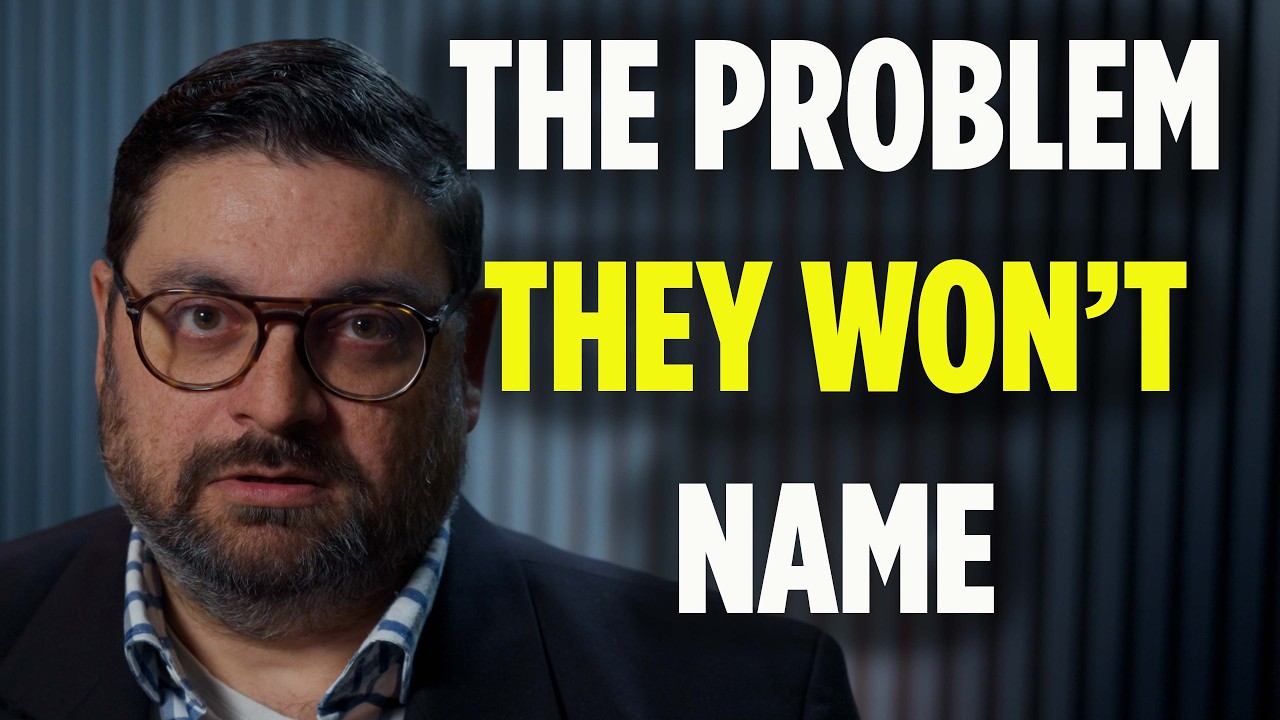












Ed Miliband warned he is risking 'accelerating the decline of UK's foundational industries'

The decarbonisation of industry should be treated as a “national security matter” if Britain is to reach Net Zero with its manufacturing base intact, experts warn.
Three industry bodies have written to Energy Secretary, Ed Miliband, saying that, without urgent action, “the UK risks accelerating the decline of its foundational industries, putting jobs, investment and energy security at risk”.
They warn in the joint letter that, without clear policy direction and investment signals, the UK “risks further decline in its critical industrial base”.
The letter is signed by representatives of the Carbon Capture and Storage Association (CCSA), Hydrogen UK and Electrify Industry.
All three industries play a key part in Britain’s decarbonisation drive.
The letter warns that high electricity costs, global competition and policy uncertainty are causing closures and dampening investment.
“Safeguarding the longstanding future of our vital industries is essential for the long-term prosperity of the UK’s economy and security of supply,” they write.
“Already, we have seen one third of the UK’s refineries close in the past year, 25 chemical industry site closures since 2020 and multiple steel producers have required Government investment to remain open.”

The Government has yet to release its updated Industrial Decarbonisation Strategy (IDS), which will set out in greater detail how climate targets can be met while safeguarding critical sectors.
The letter says the IDS should “serve as a signal of Government ambition to build back UK capacity and capability”.
“Industry views decarbonisation as an essential step and can work in lockstep with Government to achieve its aims with the right certainty in place”, it states.
It adds: “We recommend that the Government treats industrial decarbonisation as a national security matter, ensuring that British industries such as cement, chemicals, manufacturing and fuels can continue to operate, decarbonise and provide for our country.”
LATEST DEVELOPMENTS
- Farm waste could heat millions of homes and dramatically slash bills, industry experts claim
- Norway reopens three North Sea gas fields to power millions of homes while UK stalls
- Iran war sparks food price fears with retailers admitting people 'right to be concerned'

Daniel Paterson, Director of Policy and Government Affairs at Electrify Industry, warned that Britain’s “artificially high costs on electricity bills are a drag anchor on industrial investment”.
This meant businesses were missing out on the opportunity to modernise and reduce carbon emissions, he said.
He explained: “Without direct action on the policy and infrastructure costs that inflate the price of electricity for British industry, our nation’s employers and innovators will fall behind in the global race to modernise.”
Olivia Powis, CEO of the CCSA, said that carbon capture – which sees carbon dioxide emissions trapped and stored safely, often under the seabed - was “critical”.
“Without it, key sectors like cement and refining cannot decarbonise or stay competitive, risking industry leaving the UK,” she said.
She said the Government must “move at pace” and provide the uncertainty to unlock investment needed to deliver carbon capture schemes at scale. Clare Jackson, Chief Executive of Hydrogen UK, said that hydrogen would play an essential part in the country’s clean energy future.
But delays in decision making were holding back investment in a technology that “should be at the heart of the UK’s clean industrial future”, she said. She added: “With major investors ready to move and billions of pounds waiting to be deployed, Government needs to play its part and provide the certainty investors and industry needed to move forward.”
The letter calls for an acceleration in carbon capture, hydrogen and electrification programmes. It requests that regulatory and planning decisions are streamlined and that clear long-term policy guidance, along with funding certainty, was given to complex decarbonisation pathways.
It also asks for “timely delivery” of the British Industrial Competitiveness Scheme, which reduces electricity bills for eligible businesses. It further requests a “robust” carbon border adjustment mechanism, or CBAM.
This would see imported goods pay a duty on their carbon usage, meaning domestic producers enjoyed a more level playing field.
The Department for Energy Security and Net Zero spokesman said: “We are delivering first-of-a-kind carbon capture projects in the UK, backed by £9.4 billion over this parliament – supporting thousands of jobs across the country and reigniting our industrial heartlands.
“We are already seeing the first wave of large-scale hydrogen projects being delivered. We have also backed the hydrogen industry with £500m at the summer Spending Review because we recognise its important role in our mission to become a clean energy superpower, for energy security and good jobs.”
Our Standards: The GB News Editorial Charter
What's Your Reaction?
 Like
0
Like
0
 Dislike
0
Dislike
0
 Love
0
Love
0
 Funny
0
Funny
0
 Angry
0
Angry
0
 Sad
0
Sad
0
 Wow
0
Wow
0