







Grieving families must get millions stripped from evil killers and violent criminals after 'cruel loophole' closed
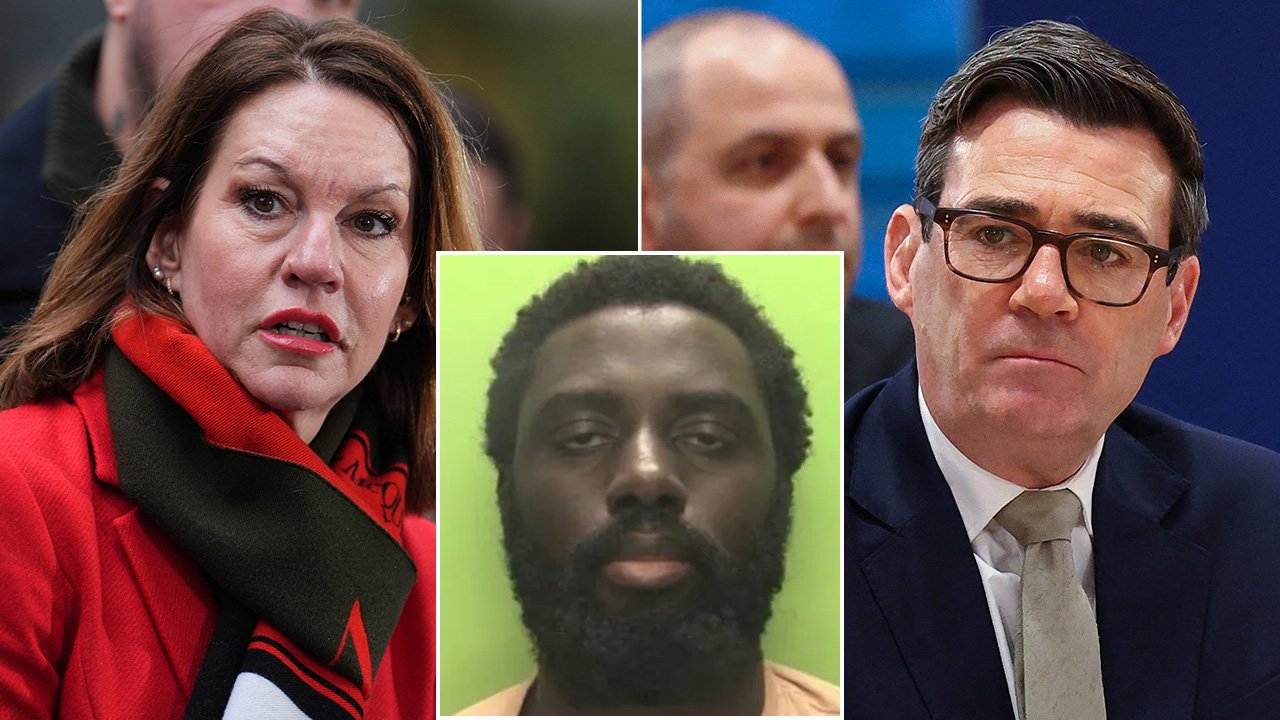
Millions of pounds of benefits stripped from evil killers and violent criminals should be handed over to support victims' families.
Emma Webber, whose son Barnaby was one of three innocents murdered by Valdo Calocane in the Nottingham attacks, told The People's Channel the Government had been right to take the handouts away.
But she urged ministers to now go further and give the money instead to those who have suffered.
Mrs Webber told GB News: "Ending that cruel loophole - where taxpayers funded benefit payments for killers in secure units - was a vital, long-overdue step. It’s a win we will take.
"How it’s been able to even happen in the first place is shameful in my opinion. However, it is only a first step."
She made clear: "These recovered funds must now be ring-fenced to provide meaningful support and advocacy for bereaved families.
"We believe that figure to be around £25million a year. The MoJ currently provides as little as £5million for homicide victim support."
In October, the Government announced that serious offenders detained in a secure hospital will no longer receive benefits.
Under current legislation, an offender on Universal Credit aged over 25 could receive over £800 a month.
The changes, expected to be implemented in early 2027, will affect some 2,500 offenders already in hospital and approximately 200 a year in future.
Offenders will no longer be entitled to either Universal Credit, Pension Credit, State Pension and Employment and Support Allowance while they remain detained in hospital.
The removal of these benefits could save the Labour Government in the low tens of millions of pounds each year.

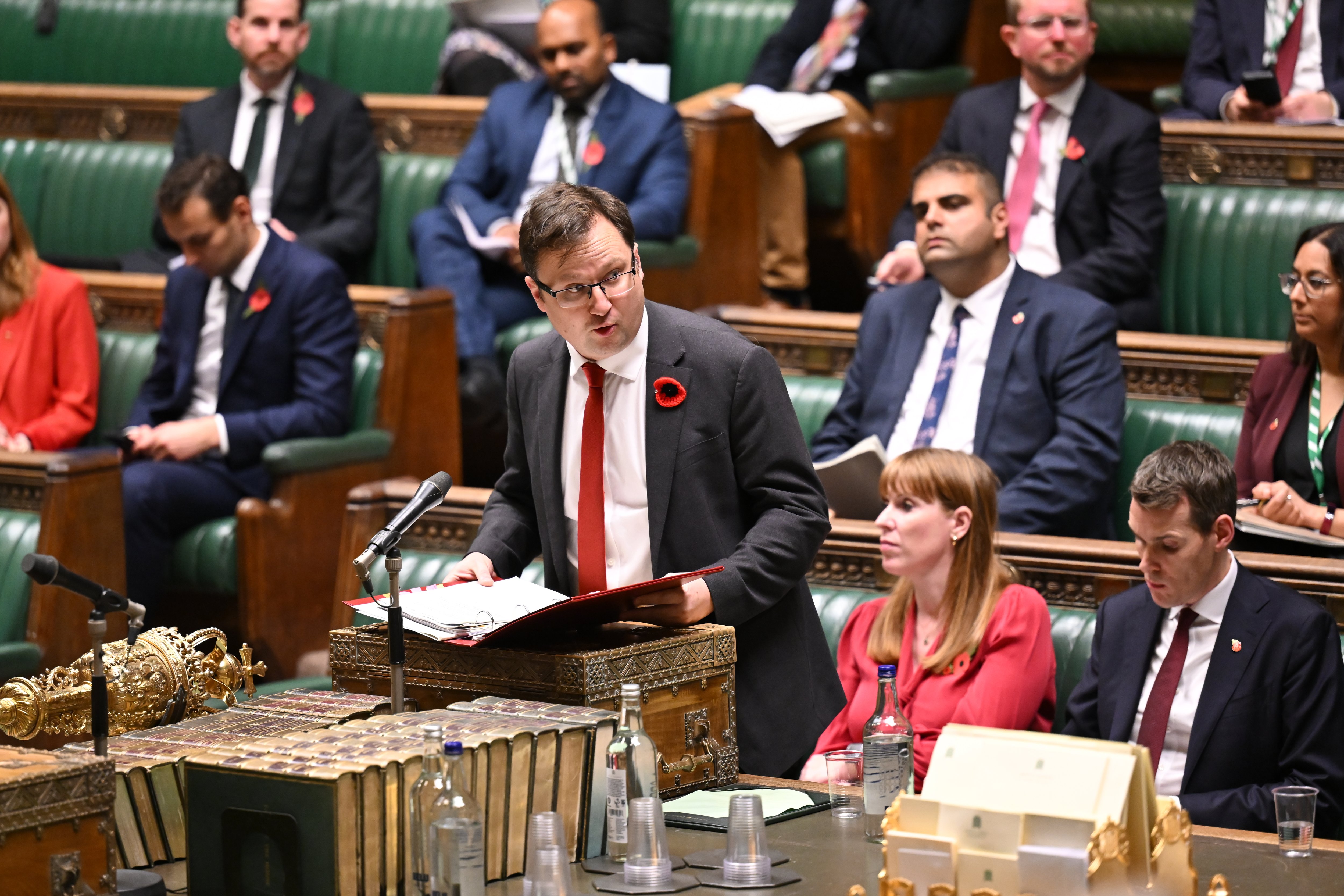
Speaking at the time of the announcement, Secretary of State for Work and Pensions Pat McFadden said that "for too long, these violent criminals have had their living costs paid by the taxpayer twice over", while their victims and families "paid the price".
He added: "We said we’d act to tackle this gross unfairness and we’re delivering on that promise.
"Victims and taxpayers deserve a system that is fair and supports only those who genuinely need it."
One of those offenders who has so far been eligible for such benefits is Nottingham triple killer Valdo Calocane.
In June 2023, Calocane killed three people and injured three others in a horrific spate of knife attacks in Nottingham.
Barnaby Webber and Grace O'Malley-Kumar, both 19, and school caretaker Ian Coates, 65 were killed in the attacks.
Calocane was sentenced to an indefinite hospital order in January 2024 due to severe paranoid schizophrenia.
He pleaded guilty to manslaughter by reason of diminished responsibility.
The Court of Appeal then reviewed the sentence after Attorney General Victoria Prentis said it was "unduly lenient".
However, the appeal was thrown out in May 2024, with judges concluding that although the offences caused "unimaginable grief", his paranoid schizophrenia was "the sole identified cause of these crimes".
After years of campaigning for justice and an extensive inquiry which found multiple failings by mental health services and Nottingham Police, the families of the Nottingham attack victims are still fighting for answers.
Mrs Webber said that ending the "cruel loophole where taxpayers funded benefit payments for killers in secure units" was a "vital, long-overdue step"
She said: "How it’s been able to even happen in the first place is shameful in my opinion. However, it is only a first step.
"These recovered funds must now be ring-fenced to provide meaningful support and advocacy for bereaved families.
"We believe that figure to be around £25million a year. The MoJ currently provides as little as £5million for homicide victim support."
Reflecting on the impact of her son’s killer being sentenced to an indefinite hospital order in 2024, Mrs Webber said it was a "devastating gut punch" for all of the victims’ families.
LATEST DEVELOPMENTS
- Terrorists could walk free early as Labour rushes to ease Britain's prison overcrowding crisis
- Andy Burnham STILL refusing to set date for cutting Britain's benefits bill: 'We can't wait!'
- Henry Nowak's killer Vickrum Digwa applies to appeal murder conviction
She told GB News: "Expecting accountability for the cold-blooded murders of Barnaby, Grace, and Ian, we instead watched the state rubber-stamp a plea deal that denied us a murder conviction and handed down a hospital order with no minimum punitive sentence.
"We also know for a fact that hospital orders are anything but indefinite. 90 per cent are out within 10 years and 80 per cent within five."
Mrs Webber made clear that "nothing has changed" within the justice system in the three years they have been fighting for answers for how they were "failed".
She said: "Nothing has changed. Everything uncovered since has only reinforced how profoundly the system failed us.
"A hospital order without a punitive element is not justice for taking three lives and attempting to take three more."
Mrs Webber argued that when it comes to how the mental health act is applied to criminals, the balance is "entirely broken".
She told GB News: "It points to a broken mental health system failing to intervene early in the community, coupled with a justice system overusing diminished responsibility and hospital orders to bypass criminal culpability.
"Section 37/41 orders are designed for treatment and risk management, not retribution or punishment. With no minimum punitive tariff and release managed by closed tribunals, victims' families are left feeling that justice has been completely sidelined."

Mrs Webber warned that the Government is "sleepwalking into a major crisis" if it does not reform sentencing guidelines with hybrid orders.
She made clear: "The legal framework revolves around the offender's recovery and rights, while victims' families are treated as an afterthought - not even considered "interested parties" at tribunals.
"Public protection and victims must come first. We are sleepwalking into a major crisis."
Mrs Webber called on all political parties, not just the Labour Government, to ensure "total transparency and statutory rights for victims in Mental Health Tribunals", or public safety will continue to be "at risk".
She said: "The Government must reform sentencing guidelines so hybrid orders (combining clinical treatment with a mandatory punitive prison tariff) are the norm for serious violent offenders, alongside total transparency and statutory rights for victims in Mental Health Tribunals.
"There is a very long way to go until there is genuine personal accountability when public bodies fail, and until victims are placed at the heart of the justice process rather than the margins, families cannot have confidence in the system.
"But as we have made clear in our words and our action, we will not stop until this is addressed. This must not become political fodder. This must be cross-party. The safety of the public is at risk.
"Without joined-up reform and real consequences for agency failures, more innocent lives will be put in danger."

The latest figures from the Ministry of Justice suggest that not only is there a growing crisis within mainstream prisons, but a potential capacity crisis in secure hospitals.
Data from the MoJ shows that the restricted patient population continues to grow with current numbers at almost 8,000 - a slight increase in 2025 of one per cent, and up 13 per cent in the last decade.
The most concerning figure is that of transfers to secure hospitals from prison. In 2025, there were 1,733 new admissions and recalls - but 65 per cent of those patients were transferred from prison.
In response to the figures, a former prison governor has argued that Labour needs to "act on several fronts, and it needs to act now".
Vanessa Frake told GB News that Labour must "stop treating prisons as a substitute for mental health services".
She said: "This should absolutely ring alarm bells for the Government. Prisons are increasingly having to deal with people whose mental health needs are far beyond what a prison can provide.
"Prison Officers are not mental health nurses. If people are deteriorating to the point where they need secure hospital treatment, we have to ask whether they were failed long before they reached prison?"
Ms Frake made clear: "The Government needs to address the shortage of secure beds and mental health services. You cannot treat a prison cell as a substitute for a psychiatric hospital.
"The Government needs to look at the whole system, not just prisons. You cannot solve a crisis in one part of the justice system by simply shifting the pressure somewhere else."
The ex-prison governor warned that Labour is at risk of facing a crisis at "both ends" of the prison system.
She said: "Prisons are overcrowded and struggling to manage people with complex mental health needs, while secure hospitals are struggling to provide the beds and specialist staff required.
"The Government needs to address the whole system, from early intervention and diversion through to prison healthcare and secure hospital capacity.
"We need fewer vulnerable people entering prison inappropriately, faster transfers into hospital and proper mental health provision in custody.
"This is about patient welfare, prison safety and public protection."
Ms Frake outlined a four-step solution for Andy Burnham: "First, divert seriously mentally ill people away from prison wherever possible, with proper psychiatric assessment at the police station and courts.
"Second, increase secure hospital capacity and specialist staffing so that people who need treatment aren't left waiting months in prison cells.

"Third, invest in mental health services inside prisons, so problems are identified and treated before they reach crisis point. And finally, make sure the 28-day hospital transfer requirement is properly delivered."
Investigative crime journalist David Shipley also believes there should be a rethink of the UK’s prison system "from the ground up".
Speaking to GB News, Mr Shipley described the decision to cut benefits as a "political gesture" by Labour.
He said: "It's obviously been forced by public reaction and political considerations, but I think it's the morally right thing to do, to cut these payments.
"However, it's not going to really affect anything. I think the challenge we have is that we are increasingly sending to secure hospitals people who've committed really awful crimes."
Mr Shipley called for there to be a "big reflection" by the Government on "what we're trying to do with prisons".
He explained: "The whole system just does need to be, I think, rethought from the ground up to try and build something that works.
"We're not going to save very much money by saying we're not going to pay out benefits to violent men who go to secure hospitals."
The crime journalist warned that the main crisis affecting secure hospitals is sending potentially dangerous criminals from prison into these environments.

He said: "We're sending really violent guys to hospitals like Valdo Calocane in a position where they can then be released fairly quickly. That's very dangerous.
"And meanwhile, we're housing in our prisons lots of men who are mentally ill in ways which are actually treatable, but we're treating them as criminals. The whole system is very dysfunctional."
Mr Shipley added: "I think the problem is putting violent men into secure hospitals which means they tend to get released quite quickly, and they go out and commit more awful violent crimes.
"I think that's the big risk here, and it's a public safety issue for me. That's the key issue."
The Conservatives have also called for an urgent investigation into the rising number of defendants ruled "unfit to plead" in court on mental health grounds.
According to Tory-led analysis of figures from HM Prisons and Probation Service, admissions of restricted patients to hospital who were judged unfit to plead almost doubled between 2019 and 2025.
Under Labour, the number judged unfit to plead has continued to increase. There were 58 unfit to plead admissions in 2023, but this increased to 72 by 2025.
Reacting to the figures, Mr Timothy told GB News: "The rising number of serious criminals being judged unfit to plead threatens public safety and denies victims justice.

"Labour must investigate and establish whether those responsible for serious, violent crimes are genuinely unfit to plead, or whether they are taking advantage of the system.
"Criminals must stand trial and, wherever possible, be given a full criminal sentence."
Julian Hendy, from the Hundred Families - a charity that provides information, analysis, advocacy, and support to families bereaved as a result of mental health killings - backed the Government's decision to remove benefits.
He said: "This is a very welcome move and something we’ve been campaigning on for nearly a decade.
"Paying thousands of pounds of state benefits to mentally disordered offenders on hospital orders who have committed the most serious of crimes cannot be justified. It is unjust and morally wrong."
Mr Hendy added: "Dangerous offenders should not be rewarded for their crimes, particularly when they have no costs and when victims’ families have to struggle so hard to get appropriate care and support.
"That’s why we’re very grateful the Government has taken action to close this dangerous loophole, which will surely help keep patients, their families, and the public safe."
In a statement, a Government spokesman said: "The Government has taken action to ensure that offenders detained in secure hospitals and subject to restrictions are no longer able to claim certain benefits.
"We are also delivering the biggest investment in victim support services to date, with more than £550million over the next three years helping victims and bereaved families access the support they need, when they need it."
Our Standards: The GB News Editorial Charter
What's Your Reaction?
 Like
0
 Dislike
0
 Love
0
 Funny
0
 Angry
0
 Sad
0
 Wow
0