























Nasa spacecraft just days away from reaching historic milestone: 'Astonishing!'
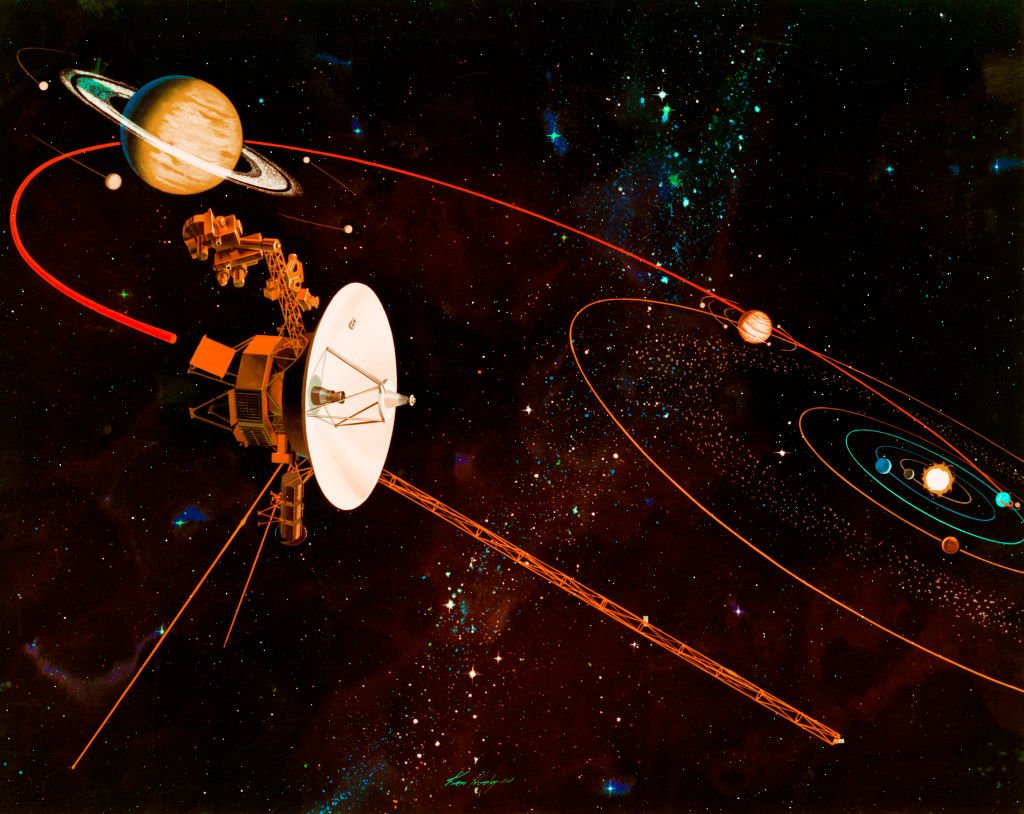
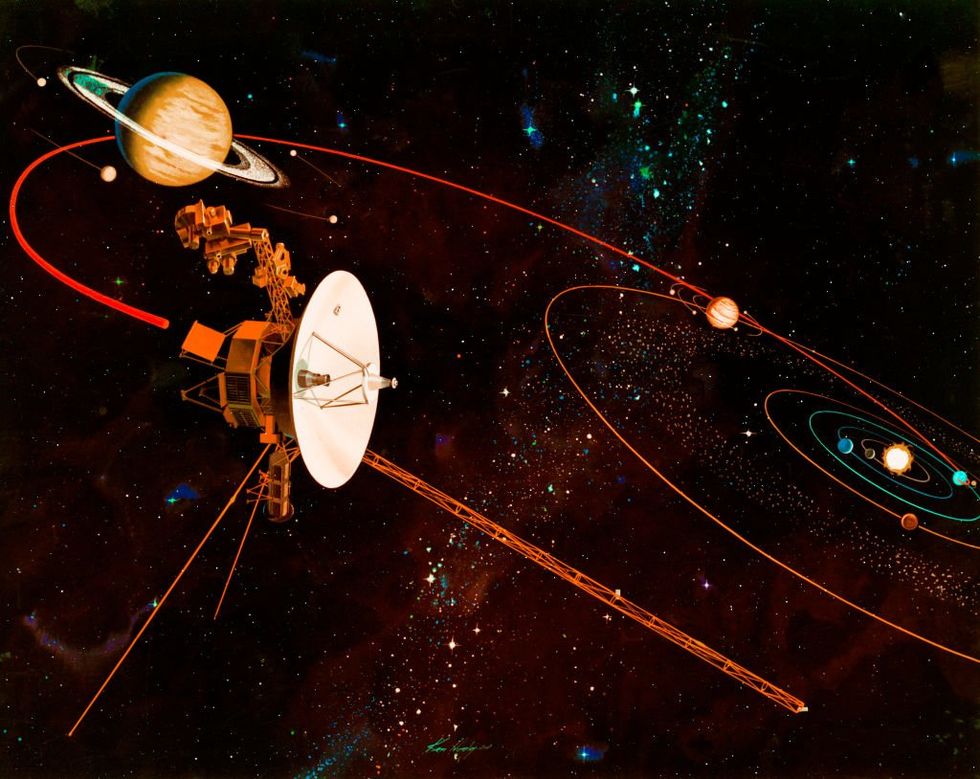
Nasa's Voyager 1 spacecraft is poised to achieve an unprecedented milestone next next Wednesday when it becomes the first human-made object to reach a distance of one light-day from our planet. At that moment, the probe will sit 16 billion miles away from Earth.
The achievement marks a distance so vast any signal transmitted from our world would require a full 24 hours to reach the spacecraft. The American space agency has launched a public initiative inviting people worldwide to participate in marking the occasion.
Members of the public are being asked to generate a "wave of golden light" encircling the globe by venturing outdoors and accessing a dedicated website. The site transforms mobile phones into devices capable of transmitting golden Morse code signals into space, creating a collective celebration of the probe's extraordinary journey into the depths of interstellar space.
The public participation scheme centres on transmitting the spacecraft's official call sign, "VGR", using the Morse code functionality built into the website. The transmission is scheduled to occur on Tuesday, November 17, one day prior to the actual milestone, ensuring the signal travels the necessary distance to arrive at Voyager 1 in time for the celebration.
Participants are encouraged to direct their illuminated devices towards the heavens, contributing to what NASA envisions as a collective greeting from humanity to its most distant emissary. The organised transmission represents a symbolic gesture rather than a practical communication.
The spacecraft will not actually observe the golden light display, however. Voyager 1's cameras were deactivated in 1990 as part of power conservation measures, rendering it unable to visually detect any signals emanating from Earth.
Those wishing to participate can access the special Morse code functionality through NASA's official website.
Dr Megan Argo, a reader in astrophysics at the University of Lancashire, described the spacecraft's continued operation as remarkable given the passage of time since its deployment.
"After 48 years in space, it's astonishing the Voyager 1 spacecraft is still functioning, sending back data and strengthening our understanding of interstellar space," she said.
Dr Argo placed the achievement in cosmic perspective, noting whilst light requires only slightly more than one second to traverse the Earth-Moon distance and 8.3 minutes to travel from the Sun to Earth, the probe remains relatively close in astronomical terms. The nearest star beyond our Sun lies more than four light-years distant, she explained, demonstrating "how immense the distances involved in space are and the challenges of communicating with any potential alien civilisations".
Dr Bill Kurth, a research scientist at the University of Iowa who joined the Voyager science team in 1974, drew parallels between the mission and humanity's greatest terrestrial explorations.
"To have sent an operating spacecraft to the distance of one light-day is a profound accomplishment by itself," Dr Kurth told The Telegraph. "I think what the Voyager missions represent is human exploration on the scale of those by Magellan, Amundsen, Peary, and Lewis and Clark. They represent humanity's curiosity and wonder about its place in the universe."
LATEST DEVELOPMENTS
- British scientists make 'thrilling' one-in-10-billion discovery after 40 years of searching
- Bombshell new research suggests Iron Age British ruler may have actually been a woman
- Nasa releases incredible images showing astronaut 'hanging upside down' during spacewalk
He expressed surprise at the mission's longevity, asking: "I certainly did not anticipate this mission lasting for nearly 50 years when I first started working on it very early in my career. How many in your readership have a 50-year-old television that still works?"
The spacecraft's endurance owes much to careful power management by Nasa's Jet Propulsion Laboratory. Radioisotope thermoelectric generators supply electricity by converting heat from decaying plutonium, although the fuel's gradual depletion costs the probe approximately four watts annually.
Voyager 1 departed with ten functioning scientific instruments but now operates with just two or three remaining active. Engineers recently disabled non-essential systems to preserve power for critical instruments, with these measures expected to sustain operations for at least another year.
The mission faced a concerning moment in late October when contact with the spacecraft was temporarily lost. Kareem Badaruddin, Voyager mission manager at JPL, acknowledged the incident in a news release: "This is the first time we've seen the spacecraft do something like this, but we are also at a point in the mission where we have to expect the unexpected. We're relieved to be back in contact with Voyager 1 and are eager to understand what happened."
Our Standards: The GB News Editorial Charter
What's Your Reaction?
 Like
0
 Dislike
0
 Love
0
 Funny
0
 Angry
0
 Sad
0
 Wow
0