






















Scientists uncover hidden world bigger than Earth 'lurking beyond Neptune'
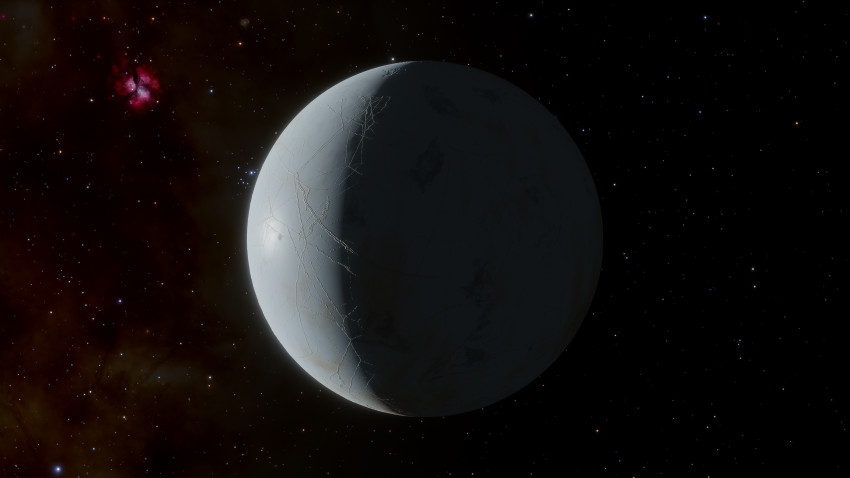
Researchers have put forward evidence suggesting an undiscovered planet may exist in the outer reaches of the Solar System, well beyond Neptune's orbit.
The hypothetical world, which scientists have dubbed "Planet X2", could possess between 1.5 and two times the mass of Earth.
Its gravitational pull might account for the peculiar orbital paths of remote icy objects that have puzzled astronomers.
The research, published today in Monthly Notices of the Royal Astronomical Society, presents a different explanation from the well-known Planet Nine hypothesis.
Dr Patryk Sofia Lykawka, of Kindai University in Japan, and colleagues suggest the planet would orbit hundreds of times farther from the Sun than Earth does. The Vera C. Rubin Observatory could potentially verify or disprove the proposition through forthcoming observations of the distant Solar System.
The area stretching beyond Neptune contains frozen remnants from the Solar System's formation, collectively known as trans-Neptunian objects. Whilst most follow relatively orderly paths within the Kuiper Belt, astronomers have identified increasingly numerous distant bodies with mysteriously elongated and extremely tilted orbits over the past twenty years.
Sedna represents one of the most perplexing examples. This icy dwarf planet travels on a vastly stretched trajectory that takes it well beyond the domain of recognised planets.
Scientists have noted these unusual movements cannot be reproduced when modelling the Solar System's evolution using only the four known giant planets. Two specific populations of objects have drawn attention: those on orbits tilted at extreme angles and those whose nearest approaches to the Sun lie far beyond Pluto's orbit.
This prompted researchers to investigate whether an unseen planet might be exerting gravitational influence from the outer Solar System.
The team conducted detailed computer modelling covering the entire 4.5-billion-year timespan of the Solar System's history. These simulations tracked the evolution of the outer Solar System whilst the giant planets moved into their current positions.

Researchers compared scenarios containing solely the four known giant planets against those incorporating an additional distant world of varying masses and orbital configurations. The models examined how such a planet might influence remote icy objects across billions of years.
Results indicated the most convincing match involves a world approximately one to two times Earth's mass, following a highly elongated path with a semimajor axis ranging from 350 to 500 astronomical units. Even at its nearest point, the planet would remain at least 200 times more distant from the Sun than Earth.
"If this planet exists, it could change how we understand the history of our Solar System and how its most distant objects came to follow such unusual orbits," Dr Lykawka stated.
Professor Jonti Horner, from the University of Southern Queensland, a co-author, described the evidence as resembling "footprints in the snow".
LATEST DEVELOPMENTS
- Archaeology breakthrough as mysterious 'sand body' unearthed at Anglo-Saxon burial site
- Some Britons have smaller brains after inheriting special Neanderthal gene, new study finds
- 'First of its kind' archaeology breakthrough solves mystery of 2,000-year-old bog body
The findings present an alternative to the Planet Nine hypothesis, which proposes a significantly larger world of approximately 4.4 Earth masses orbiting at around 290 astronomical units from the Sun. Because the two theories address different sets of orbital irregularities, both planets could conceivably exist in the outer Solar System.
"It is possible that there could be neither. It's possible there could be both. It's possible there could be one or the other," Professor Horner explained.
The simulations do not perfectly replicate all observations. Dr Lykawka acknowledged: 'Our model reproduces several of the unusual orbital patterns observed among distant icy objects, although there are still differences between the model and observations that we need to investigate further.'
Nevertheless, Professor Horner described the results as compelling. "This isn't a perfect fit. You wouldn't expect it to be. I'd be more worried if it was, to be honest," he said.
The Vera C. Rubin Observatory in Chile could provide the means to test these predictions through its forthcoming observations. Its highly sensitive telescope will identify vast numbers of previously unknown trans-Neptunian objects, furnishing astronomers with a substantially larger dataset against which to assess the models.
Should Planet X2 exist, the distinctive orbital populations forecast by Dr Lykawka and his colleagues ought to become progressively more evident as additional objects are detected. The observatory might even directly observe the planet itself, although Professor Horner cautioned its extreme distance and faintness would make such detection considerably more challenging.
"The exciting thing is that we now have an opportunity to put this idea to the test," Professor Horner said.
"As the Rubin Observatory surveys the sky, we will find new clues that help us understand the distant reaches of the Solar System and whether another planet is still waiting to be discovered."
Our Standards: The GB News Editorial Charter
What's Your Reaction?
 Like
0
 Dislike
0
 Love
0
 Funny
0
 Angry
0
 Sad
0
 Wow
0